What Axiom Thinking Does
Three pillars. One philosophy.
Axiom Thinking operates across three interconnected areas of practice, each built on the same foundation: that better frameworks, honestly built from real experience, produce better outcomes than guesswork ever will.
01
The Axiom Interview Blueprint
A complete six-stage framework for the entire interview process, from preparation through to offer negotiation.
Explore →
02
MedTech Consultancy
UK market entry strategy and NHS navigation for international MedTech companies entering or scaling in the UK.
Find out more →
03
Sales Training
The Axiom Sales Blueprint, applying the same framework philosophy to sales performance and commercial communication. Coming soon.
Register interest →
The Name
Why Axiom Thinking
An axiom is a fundamental truth, the kind that doesn't need proving. A starting point from which everything else is built. The name says: we start from what is actually true, not what sounds good or what people want to hear.
Better thinking leads to better maps. Better maps lead to better outcomes. That is the entire philosophy in three sentences.
The Founder
Oliver Grey
A decade in MedTech sales. Builder of The Axiom Interview Blueprint.
The Brain
My brain is a little different.
Some of the structures in my left hemisphere are wired differently, so my brain compensates by recruiting the right. The side that thinks in patterns, pictures and possibilities rather than sequences.
On top of that I have a complex neurodevelopmental condition involving functional under-connectivity of neural networks and disruption in dopamine and noradrenaline signalling. Which is to say, my brain's reward system runs on a different threshold. Low stimulation barely registers. High stimulation is rocket fuel.
You've probably heard of both. The super fun one-two punch of dyslexia and ADHD.
For me this makes some tasks harder than they would be for a less neuro-spicy person. But as is so often the case, it comes with some pretty extraordinary upsides if you can learn to lean into them.
I stride into the unknown with excitement rather than anxiety. I see solutions others don't and connections others miss. I can hold the here and now and the big picture simultaneously without losing either. I love learning and absorb information quickly, mapping new ideas into the bigger picture almost instantly.
Micro-dosing stimulants, the approved medication for ADHD, just to be clear, helps rein in the more chaotic elements. It also means I run hot. I don't get tired. I don't need breaks. I barely need food. And under pressure it all gets turned up to eleven.
Axiom Thinking was probably inevitable.
The Experience
A decade in the field.
I've spent ten years in MedTech sales, hunting new business, navigating the NHS, and working with some of the most dynamic and driven people I've ever met. I've sold to private cardiologists, GP practices and NHS procurement committees. I've led the UK commercial operation for a Danish scale-up specialising in long-term cardiac monitoring.
I know what it takes to get in the room, hold the room and close the room. I know how the NHS actually works, not how it describes itself, but how decisions actually get made and who makes them. I know the difference between the private sector's pace and the NHS's complexity and how to navigate both.
Along the way I read everything I could get my hands on. Communication, influence, negotiation, human behaviour, sales psychology. Not because anyone told me to. Because I couldn't stop. That's the ADHD again.
The Why
Why Axiom Thinking exists.
At some point I realised something that felt important. The nexus of what I am genuinely best at and what I love doing most, the place where those two things overlap completely, is working with dynamic people who make things happen and helping them get better at it.
That realisation is what built Axiom Thinking.
The Approach
Curator, not inventor.
I'm not the inventor of these ideas. I want to be clear about that.
What I am is the person who went and found the best ones: from a decade in the field, from conversations with people I deeply respect, and from a library's worth of the best thinking on communication, influence and human behaviour, and built them into something you can actually use.
The Axiom Interview Blueprint isn't a collection of generic tips. It's a decade of real experience, expert consultation and extensive reading, distilled into a framework that works in actual rooms with actual humans.
I've done the reading so you don't have to. I've tested it in the room so you don't have to get it wrong first. And I've built the map, because a better map really does change everything.
"If you're someone who makes things happen, or you're working on becoming that person, I'd genuinely love to talk."
Book a Free Discovery Call
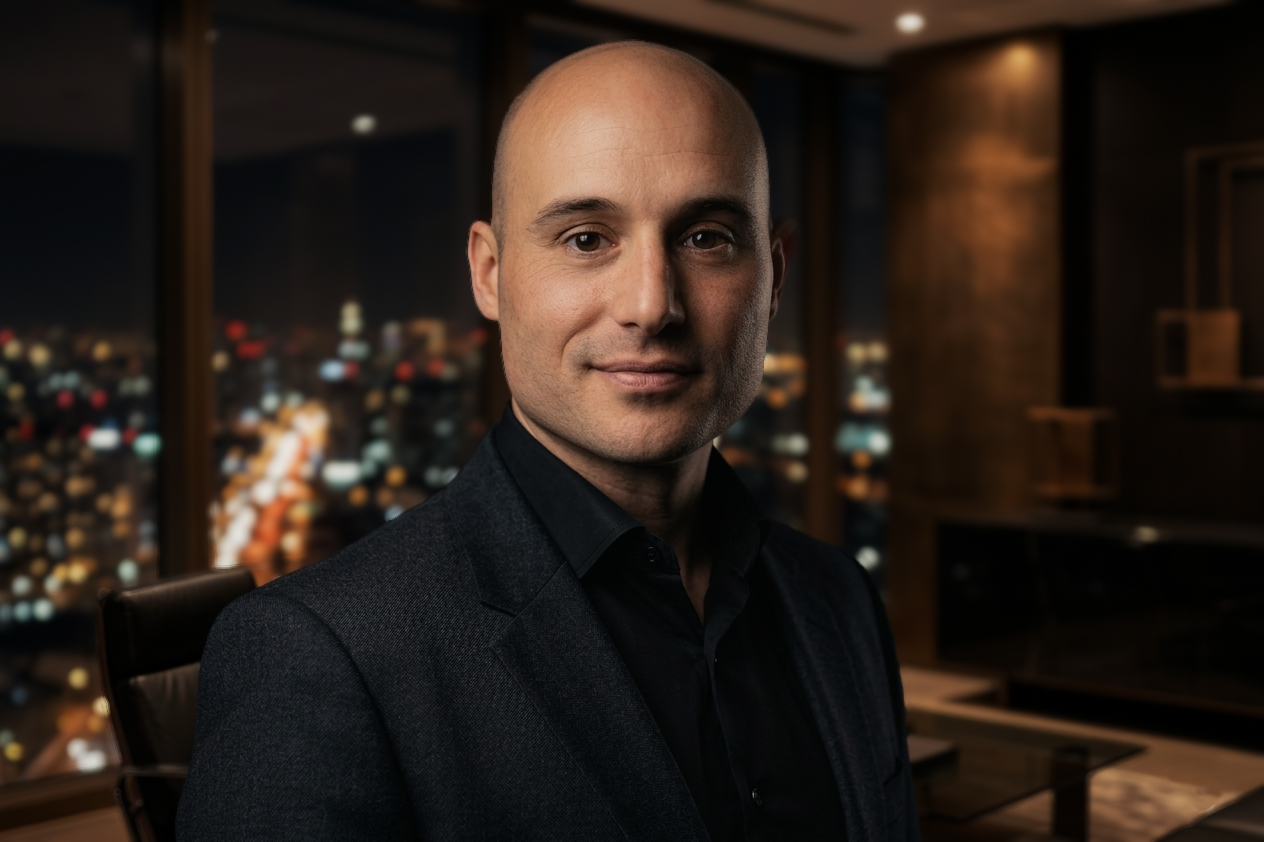 Oliver Grey, Founder, Axiom Thinking